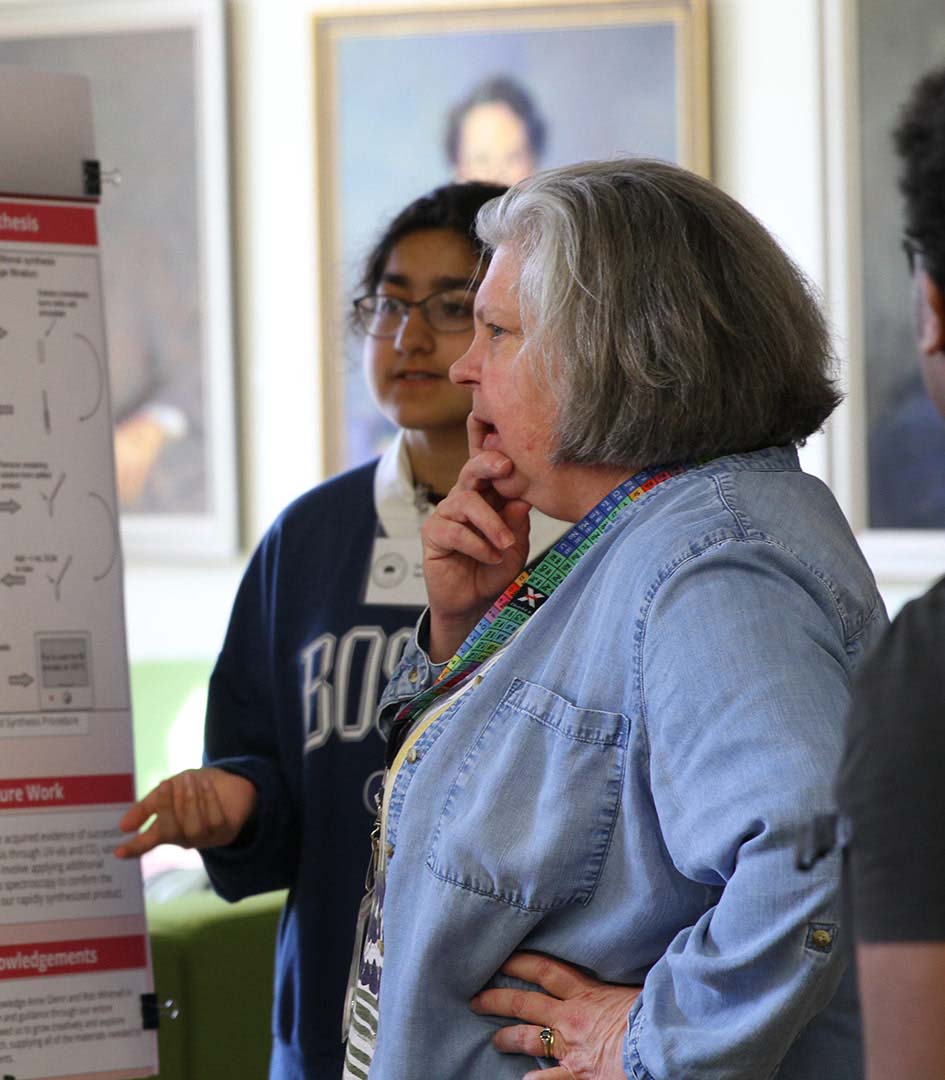
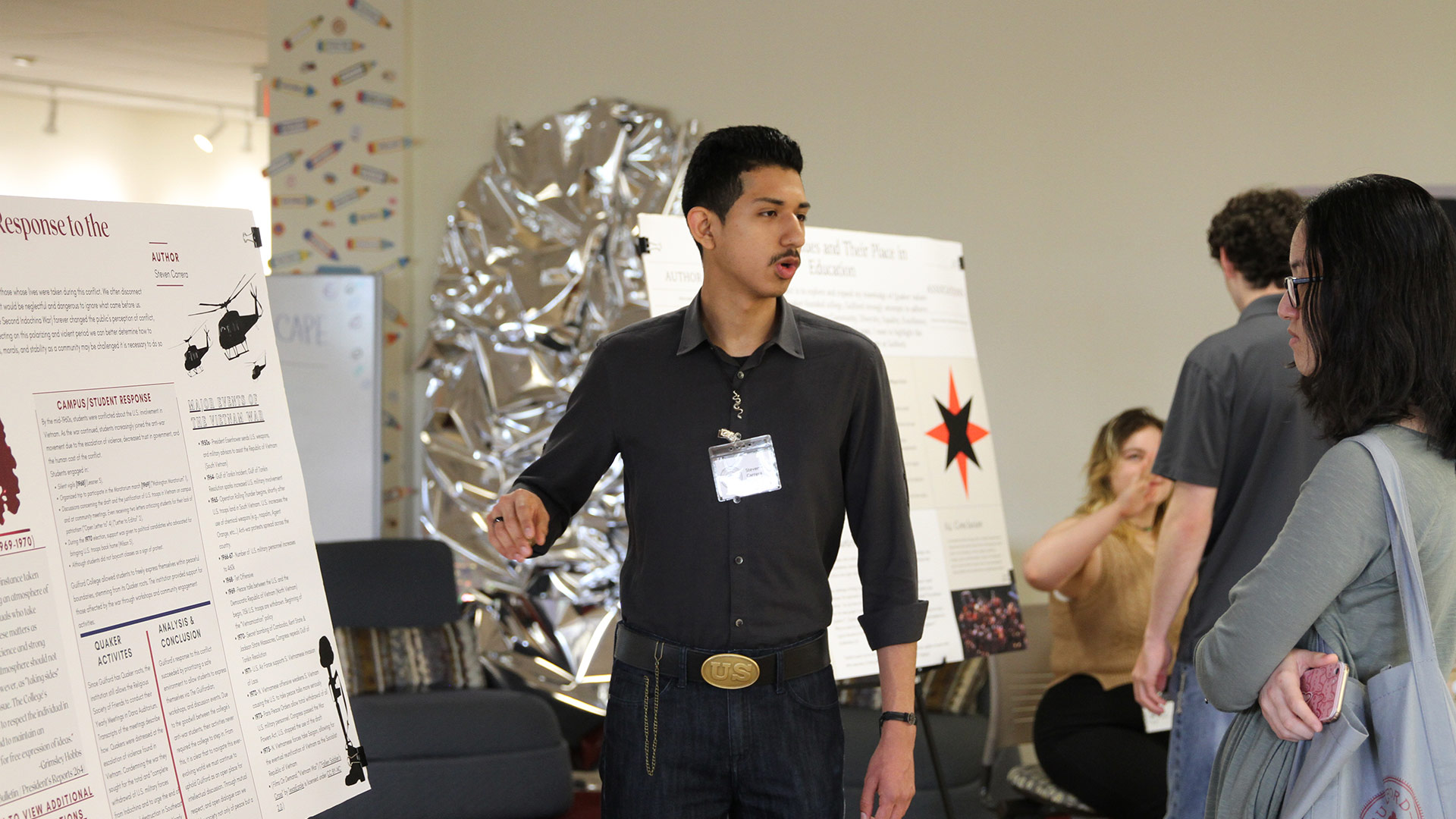
While the Guilford Undergraduate Symposium (GUS) showcases student work, none of it would be possible without faculty and staff mentors. As GUS has grown from about 50 presentations in 2008 to more than 150 in recent years, mentors have played a crucial role in guiding students toward their project's goal, be it an independent study, a series of experiments, a dramatic presentation, an art installation, or anything in between, mentors are there to guide. While participation as either a student presenter or a faculty/staff mentor is not required, we hope that all will get involved, and stay involved, to make GUS a premier event of the academic calendar.
All accepted abracts will be published online in the annual symposium program. Research mentors will be listed long with their students' abstracts and will be acknowledged at the presentation sessions. Research mentors are strongly encouraged to attend the sessions and to assist students with presentation practice or design, particularly student who have not yet presented their work for a general audience.
Additionally, a faculty or staff moderator/chair will be present at each session to facilitate discussion and moderate the Q&A session. If you wish to serve as a moderator/chair, please fill out the moderator form (link coming soon) or email gus [at] guilford.edu.
Mentoring is a valuable and rewarding role that allows you to share your knowledge, experience, and wisdom with others. In this guide, we'll share some key tips and strategies to help you become a successful and impactful mentor.
Having a well-prepared mentor can make a huge difference in undergraduate research. We have compiled a list of resources here to help mentors refine existing skills and develop new ones. This list is updated periodically when new resources are found.
A good place to start is with Shanahan, Ackley-Holbrook, Hall, Stewart, and Walkington (2015), who note the "well-established benefits for students involved in [undergraduate research] are dependent, first and foremost, on high-quality mentoring." (p. 1) Table 1, on p. 4, is a good overview of the article's point, which comes after a review of more than 100 scholarly articles. Elon University's Center for Engaged Learning also has resources on the salient practices.